
Criminal Court Records in Bryan County
A criminal court record is the case file a court opens the moment formal charges are filed against a person. In Bryan County that file is created and kept by the District Court, where the Court Clerk records, files, and maintains permanent records of every District Court proceeding. The clerk's office handles the criminal division alongside civil, probate, juvenile, and small claims work. Once a case opens, the clerk logs each charge, hearing, court minute, bond, and order in one running docket. The result is a chronological history of the case that stays available to the public unless a court later restricts it.
The District Court is the trial venue for serious crime in Bryan County. Felony cases carry a CF prefix and misdemeanors carry a CM prefix, and both move through the same downtown Durant courthouse. City ordinance violations and many Durant traffic citations are different. Those are heard in Durant Municipal Court and do not appear in the District Court file. The court record covers what the judge and clerk did with a case, while the charges themselves and the arrest behind them sit in related files. For the charging side, the Bryan County arrest records and court charges page goes deeper, and the broader Bryan County court records page covers civil, family, and probate files held by the same clerk.
Who Files Criminal Charges in Bryan County
Police and the sheriff make arrests, but they do not file the court case. In Oklahoma the District Attorney decides what charges to file and which statutes to cite. Tim Webster serves as the District Attorney for Bryan County and prosecutes state criminal cases in District Court. The arrest allegation written by an officer and the charge filed by the prosecutor are not always the same. A charge can be added, reduced, amended, or declined after the prosecutor reviews the case. The version that controls the court record is the prosecutor's filing, shown in the Offense or Cause lines of the case file.
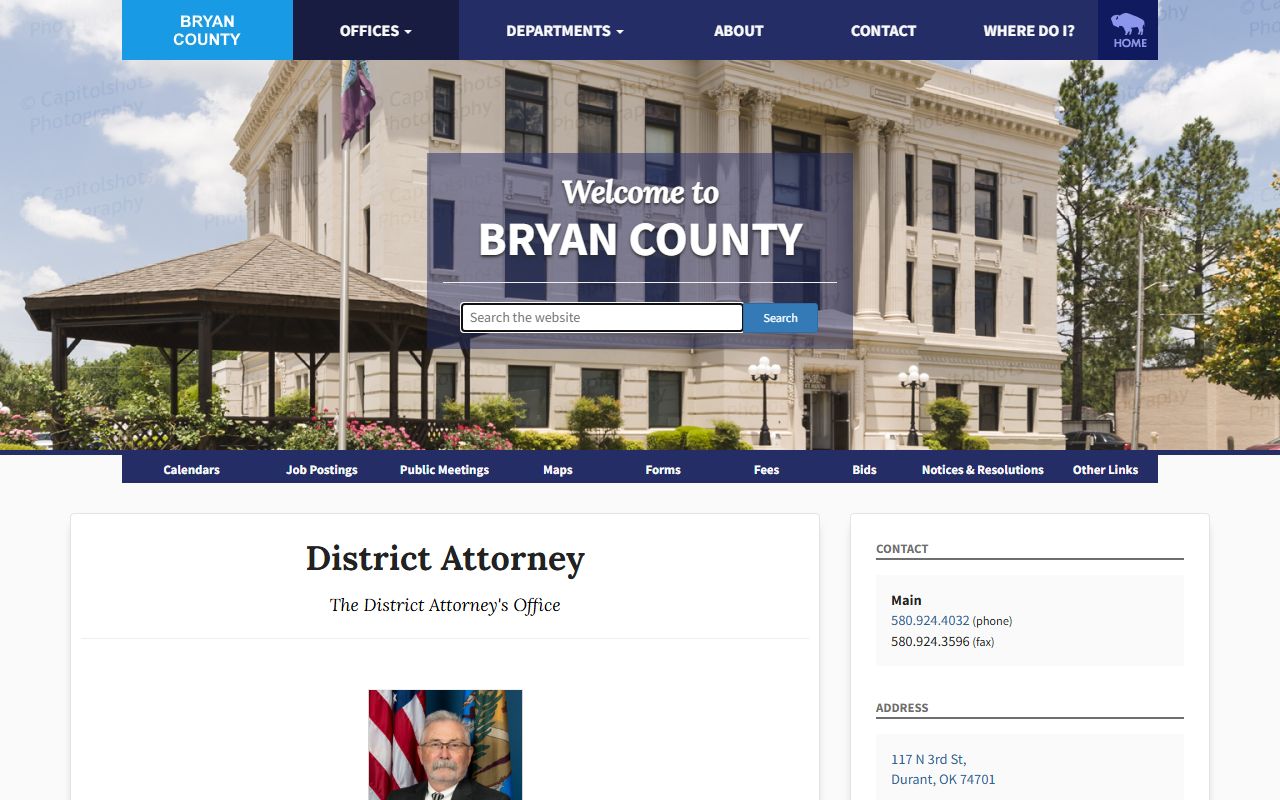
The District Attorney works from an office near the courthouse on North 3rd Street in Durant. For questions about how a specific case was charged, the prosecutor's office is the source. A look at the Bryan County District Attorney page shows the office that drives every criminal filing in the county.
Because the prosecutor controls the filed charge, two records can describe the same incident in different words. The booking sheet from the jail lists the arrest charge, while the court file lists the charge the District Attorney chose to pursue. Reading both gives the clearest picture of a case.
How to Search Bryan County Criminal Court Records
The county links its official court search to On Demand Court Records, known as ODCR. The Bryan County Court Clerk page sends users straight to ODCR to search court records, and the system covers District Court filings including felony and misdemeanor cases. The Oklahoma State Courts Network, or OSCN, offers a second path through its statewide docket search. Either route lets a person look up a Bryan County criminal case by defendant name or by case number.
- Open ODCR and choose Oklahoma District Courts, then set the court to Bryan.
- Search by party name in Last, First format, or enter a full case number if you have it.
- Narrow the results using a case type such as Criminal Felony Proceedings or Criminal Misdemeanor Proceedings, and add a filed-date range.
- Open the matching case to read the charges, docket entries, court dates, disposition, and any amount owed.
- Request a certified copy from the Court Clerk if you need an official document for legal use.
Statewide searches add reach. The OSCN docket search can route users to available case records across Oklahoma, and a statewide criminal-history check runs through the Oklahoma State Bureau of Investigation rather than the county clerk. Older files or documents that never went online should be requested directly from the Court Clerk in person or by phone at 580-924-1446.
Stages of a Bryan County Criminal Case
A criminal case moves through the court in a set order, and each step leaves its own mark in the record. Charges open the file. Hearings and motions build the middle of the docket. A plea or trial decides guilt, and sentencing closes the matter. Reading the docket entries in sequence shows exactly where a case stands.
Case flow: Charges Filed › Arraignment › Pretrial / Motions › Plea or Trial › Disposition › Sentencing
| Stage | What Happens |
|---|---|
| Arraignment | The defendant first appears, hears the formal charges, and enters a plea of guilty, not guilty, or no contest. The judge may set bond and future dates. |
| Pretrial / Motions | Lawyers exchange evidence and file motions, subpoenas issue, and the case appears on conference and docket-sounding dates while plea talks continue. |
| Plea or Trial | Most cases end in a negotiated plea. Others go to a jury or bench trial where the State must prove guilt beyond a reasonable doubt. |
| Sentencing | After a plea or verdict the judge orders the sentence, which can include jail or prison, fines, court costs, probation, or a deferred sentence. |
What a Bryan County Criminal Court Record Shows
An open criminal case in ODCR displays a consistent set of fields. A real felony record, such as the public detail page for Bryan OK CF-2023-00215, lists the caption, the case identifier, the type of case, the filing date, the offense or cause with numbered charges, court minutes, calendar events, receipts, and the running amount owed. Public snippets do not show Social Security numbers or full dates of birth. The table below walks through the parts a reader will use most.
| Field | What It Shows |
|---|---|
| Case Number | The county and identifier, for example Bryan OK - CF-2023-00215. CF marks a felony and CM marks a misdemeanor. |
| Caption / Parties | The case style, written as STATE OF OKLAHOMA vs. the defendant, plus listed attorneys where available. |
| Type of Case | The category, such as Criminal Felony Proceedings or Criminal Misdemeanor Proceedings. |
| Date Filed | The date the District Attorney filed the case with the Court Clerk. |
| Offense or Cause | Each numbered charge with the statute alleged and the disposition text for that count. |
| Court Minutes | Brief official notes of what happened at each hearing, including probable cause and initial appearance minutes. |
| Bonds & Commitments | Appearance bond entries, surety details, and any commitment ordering the defendant held or transferred. |
| Plea | How the defendant answered each charge: guilty, not guilty, or no contest. |
| Disposition | The result of each count, such as convicted, dismissed, acquitted, or deferred. |
| Sentence & Amount Owed | The punishment ordered plus fines, court costs, and the running balance with a last-updated timestamp. |
Note: The case caption, identifier, and offense lines are usually enough to confirm you are looking at the right person before you rely on a record.
Charges vs. Convictions in the Record
Being charged is not the same as being convicted. A criminal court record can show charges that were later dropped, dismissed, reduced, or that ended in an acquittal. A charge is only an accusation the prosecutor must still prove. A conviction is the court's finding of guilt, reached either by a plea or by a verdict. Reading a Bryan County record means checking the disposition next to each count, not just the charge at the top.
| Charge | Conviction | |
|---|---|---|
| Stage | Accusation filed by the District Attorney | Verdict or plea entered in court |
| Burden of Proof | Probable cause | Beyond a reasonable doubt |
| Meaning | The case has begun, guilt is not decided | The court has found the person guilty |
| Public Record | Yes, shown in the case file | Yes, shown in the disposition |
Reading Dispositions and Sentences
The disposition is the final result of a charge. Common entries include guilty, not guilty, dismissed, a no contest plea, and a deferred sentence where punishment is delayed and the charge may be dismissed after conditions are met. A sentence sits next to a conviction and spells out the punishment, which can mix jail or prison time, fines, court costs, and probation. The amount owed line tracks fines and costs as they are paid, and a bench warrant for failure to pay can show up as a later docket entry.
When a sentence sends a person to state prison, the court file stops being the only source. Custody after a felony conviction is tracked by the Oklahoma Department of Corrections, not the county jail. The Oklahoma DOC offender information page explains the offender lookup, sex offender lookup, and records-request tools that follow a sentenced person into prison.
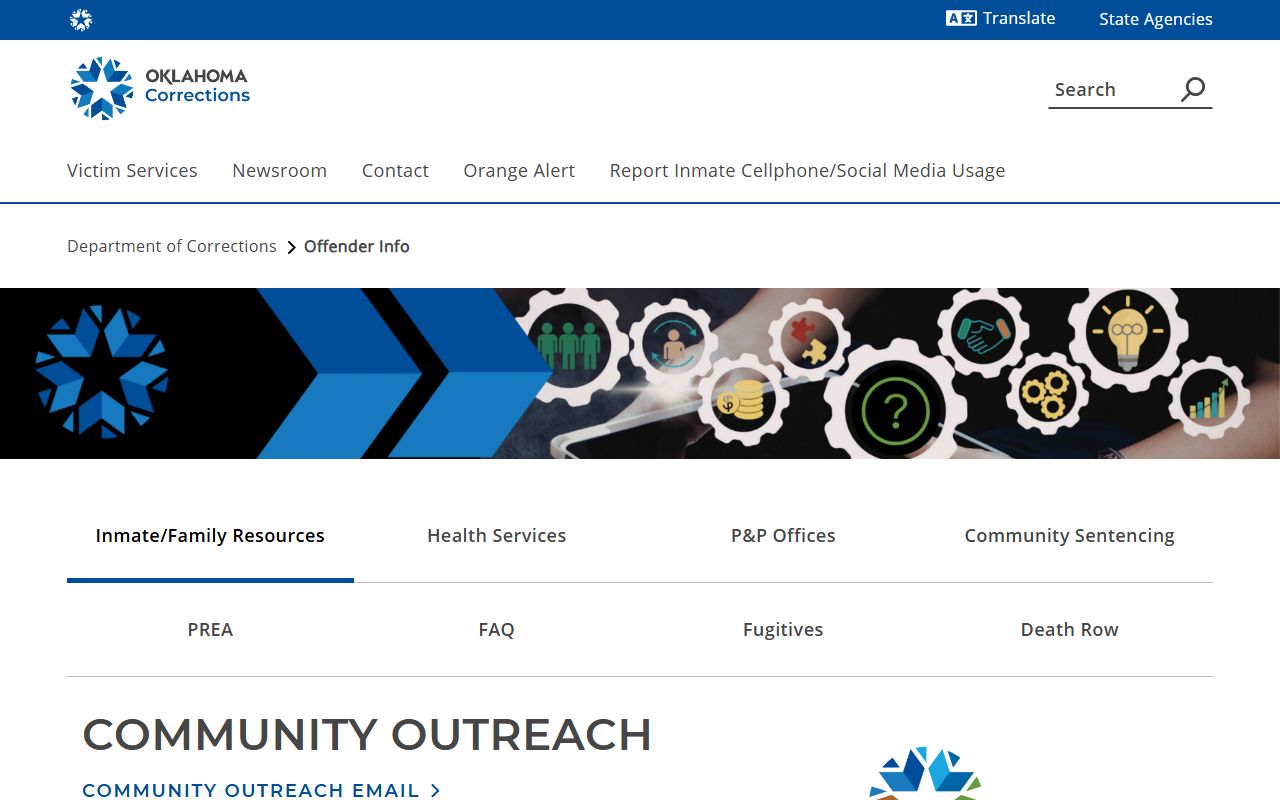
The DOC system warns that its lookup is abbreviated and not an exact account of the offense, the sentence details, or the time left to serve. For that reason, the District Court file and the DOC record should be read together. The court file holds the conviction and the ordered sentence, while DOC holds the current custody status of a state inmate.
Sealed vs. Expunged Criminal Records
Not every old case stays public forever. Oklahoma lets eligible people seal a criminal record from public view through expungement. In everyday terms, sealing hides a file while it still exists, and expungement removes public access and separates identifying data from the record. Oklahoma uses the word expungement for this sealing process, so the two ideas overlap more here than in some states. Eligibility categories sit in 22 O.S. Section 18, and a deferred sentence can be expunged under 22 O.S. Section 991c.
| Sealed | Expunged | |
|---|---|---|
| Visibility | Hidden from public view, the file still exists | Public access sealed, identifying data detached |
| Law Enforcement | Limited access remains | Very limited; OSBI keeps fingerprint cards but removes identifying links |
| Authority | Court order restricting a filing | 22 O.S. Section 18 and Section 19; deferred sentences under Section 991c |
| Timing | When the court enters the order | Usually about one month after OSBI receives a certified order and fee |
The Oklahoma State Bureau of Investigation publishes the process and its limits. OSBI cannot pre-approve eligibility, the State may object even when a person qualifies, and the age of an arrest does not by itself disqualify someone. Multiple arrests in the same county can be filed in one petition, but separate counties need separate petitions. The OSBI expungement guidance lays out the timeline, and the actual filing should go through the Court Clerk and qualified counsel.
Public Access to Bryan County Criminal Court Records
Criminal case files are public records in Oklahoma. The Oklahoma Open Records Act treats records held by public bodies and officials as open for inspection and copying during business hours, unless a specific law makes them confidential. That rule is why ODCR and OSCN can show charges, dockets, and dispositions to anyone. A court can still limit access in a single case by order, so a few files are restricted even though the system is open by default.
Key Statutes:
Oklahoma Statutes § 51-24A.5 - Records of public bodies and officials are open for inspection and copying during regular business hours, subject to listed exemptions.
Oklahoma Statutes § 51-24A.29 - A court may enter an order restricting public inspection of pleadings and court records in a case.
For files that are public, the practical path starts online and ends at the clerk. Start with ODCR or OSCN, then contact the Court Clerk for certified copies, older files, or documents that never appeared online. The clerk's office sits inside the courthouse on West Evergreen Street in downtown Durant.
Federal Criminal Cases From Bryan County
Some crimes connected to Bryan County never reach the District Court at all. Federal offenses are prosecuted in the U.S. District Court for the Eastern District of Oklahoma, and they are filed and tracked separately from the county case system. A federal drug case, for example, is handled by the United States Attorney rather than the local District Attorney. These files do not appear in ODCR or OSCN, and the county Court Clerk does not keep them.
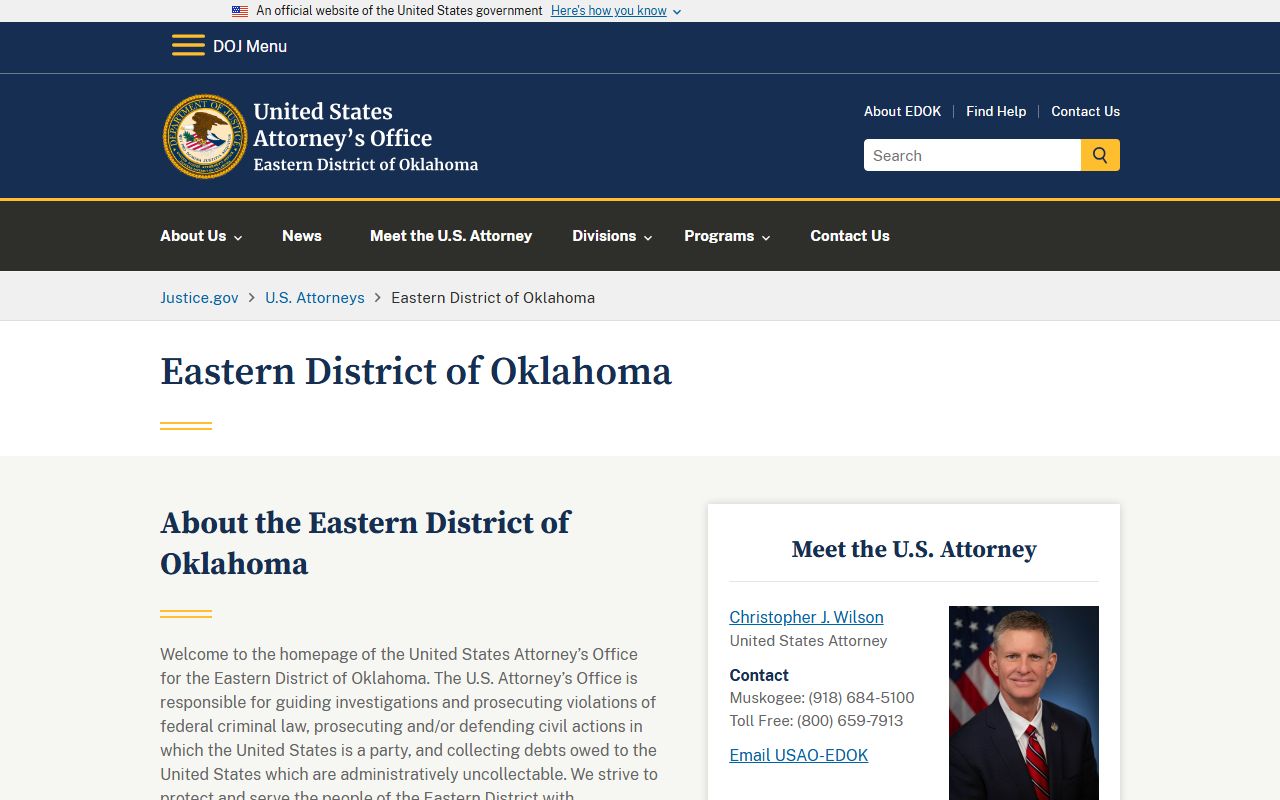
The federal prosecutor for the region is the source for those matters. The U.S. Attorney for the Eastern District of Oklahoma covers the counties that include Bryan and announces local federal prosecutions.
To read the actual federal docket, the record lives in the federal system. PACER hosts federal case dockets and documents, and the federal court information pages explain how the Eastern District operates. Anyone tracing a Bryan County resident charged with a federal crime should look there, not in the county court search.
Arrest and Booking Records Are Separate
The court file and the jail file are two different records. When the sheriff makes an arrest, the booking record lists the arrest charge, the booking date, and custody details. That information lives with the Bryan County Sheriff's Office and its jail roster, not in the District Court docket. The court record begins later, when the District Attorney files the case and the Court Clerk opens the docket.
Both records matter for a full picture. The booking sheet shows the moment of arrest, while the court file shows the charges, pleas, and outcome. The Bryan County inmate records page covers the jail roster and booking side. A reader who only checks one of the two can miss either the arrest detail or the case result.
Background Check Considerations
A casual ODCR lookup and a formal background check are not the same thing. Reading a public docket tells you what a court did, but it is not a regulated consumer report. A background check used for hiring, housing, or credit must follow the Fair Credit Reporting Act and run through a compliant agency. For a true criminal-history check, the Oklahoma State Bureau of Investigation is the statewide source, and it can show arrests and dispositions when requested through its process.
Important: This website is not a consumer reporting agency under the Fair Credit Reporting Act, and its records may not be used for employment, tenant, credit, or insurance screening.
Restricted Criminal Court Records in Bryan County
Some criminal-adjacent records stay closed even when a case once existed. Juvenile and youthful-offender matters are confidential under Oklahoma law, so they may appear as case categories without full public detail. Sealed and expunged files drop out of public view once a court order takes effect. Mental health court and similar treatment matters can carry restricted medical detail, and public records routinely redact Social Security numbers, financial account numbers, and protected victim or minor information.
An open case can also be limited while it is active. A judge may restrict inspection of specific filings, and sensitive material in a pending matter is not always posted online. When a record does not show up, that absence is not proof a case never happened. The Court Clerk can confirm whether a file exists, whether it is sealed, and what part of it remains public.