
What Probate Covers in Bryan County
Probate is the court process that handles a person's estate after death. It proves whether a will is valid, names someone to manage the estate, gathers and values the assets, pays debts and taxes, and passes what remains to the rightful heirs. When there is no will, the same division decides who inherits under Oklahoma's intestate rules. The work covers far more than wills, though. Guardianships for minors and incapacitated adults, conservatorships over property, and certain trust proceedings all flow through the same court.
In Oklahoma, probate is not a standalone court with its own building. It is a division of the District Court, and Bryan County is no exception. The District Court at 402 W Evergreen Street in Durant hears probate alongside civil, criminal, family, and small claims matters. The Court Clerk, Stacey Canant, files and maintains the permanent record of every probate case, and her office works directly with the probate division. The county lays out those duties on the official Bryan County Court Clerk page, which also links the public straight to court-record search.
That single point of contact keeps things simple. A family opening an estate, a person seeking guardianship of an aging parent, and a researcher tracing an old will all start at the same Durant counter.
Probate Terms Defined
Probate paperwork is dense with words that rarely come up anywhere else. A handful of terms appear on almost every Bryan County estate file, and knowing them makes a case record far easier to read. The short glossary below explains the ones that matter most before any search begins.
- Testator
- The person who made the will. A valid will speaks for the testator after death.
- Executor
- The person named in a will to carry it out. Once the court issues letters testamentary, the executor acts as the estate's personal representative.
- Intestate
- Dying without a valid will. Oklahoma law then decides who inherits and in what shares.
- Guardianship
- A court arrangement giving one person legal authority to care for a minor or an incapacitated adult.
- Conservatorship
- A court order placing a person's financial affairs and property under the management of an appointed conservator.
How to Search Bryan County Probate Records
The Court Clerk's page links the public to On Demand Court Records, the portal Bryan County uses for District Court files. Probate cases sit in that same system, searchable by the name of the person who died or by case number. The Oklahoma State Courts Network is a second path, with its own docket search across the state judiciary. Both are free to search, and the steps below walk through a typical probate lookup on ODCR.
- Open the ODCR search page and set the court group to Oklahoma District Courts, then choose Bryan as the court.
- Enter the decedent or party name in Last, First format, or type the full case number if you already have it.
- Narrow the results by selecting a case type such as Probate Proceedings, Filing of Wills, Guardianships, or Conservatorship.
- If you know the prefix, search the PB or PR case number directly for a faster match.
- Open the detail page to read the caption, filing date, docket entries, hearing dates, and itemized costs.
Estate captions read differently from other cases. Instead of one party against another, a probate file is styled "In the Matter of the Estate of" the person who died. Older files and documents that never went online should be requested from the Court Clerk in person or by phone at 580-924-1446. You can reach the statewide docket tools through the OSCN docket search as well, which may route you to available case records.
Note: A probate case appearing in an online search does not make every page inside it public, since a judge can seal individual filings or an entire guardianship.
Where Bryan County Probate Is Heard
Every Bryan County probate case runs through one courthouse. The District Court and the Court Clerk both sit at 402 W Evergreen Street in Durant, so filings, hearings, and copy requests all happen at the same address. District Judge Mark R. Campbell presides over District Court matters from that building, and the county publishes his hours and contact details on the official Bryan County District Judge page.
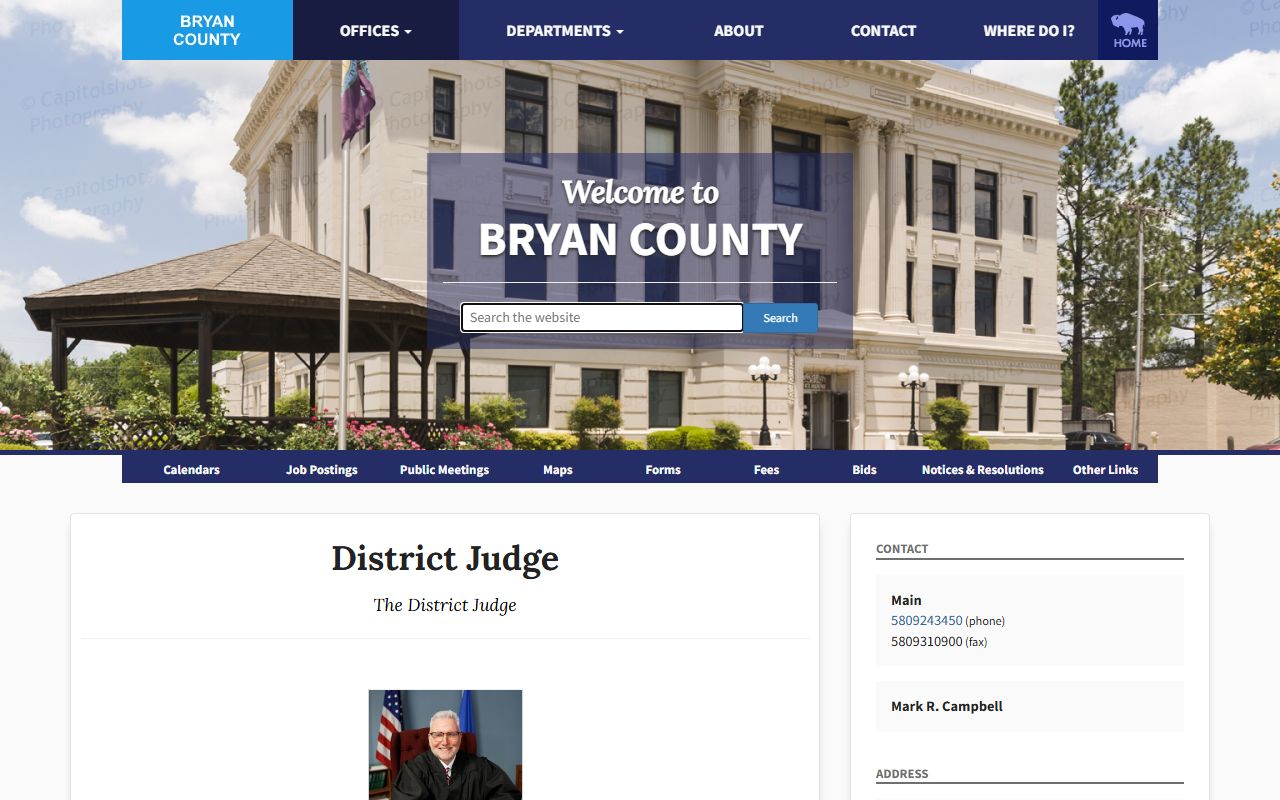
The judge decides the case, but the Court Clerk is the office a family deals with day to day. The clerk accepts the petition, sets the file, schedules hearings on the probate calendar, and certifies the letters that empower a personal representative. The two contact cards below cover both ends of a Bryan County probate matter.
Bryan County Court Clerk
402 W Evergreen St
Durant, OK 74701
580-924-1446
Monday to Friday, 8:00am to 4:30pm
District Judge Mark R. Campbell
402 W Evergreen St
Durant, OK 74701
580-924-3450
8:00am to 12:00pm, 1:00pm to 4:30pm
What Bryan County Probate Records Show
A probate file builds up in layers as the case moves forward. It opens with a petition and grows to hold the will, notices, hearing orders, the inventory of assets, periodic accountings, creditor claims, and the final order closing the estate. Guardianship and conservatorship files follow the same shape, adding letters of guardianship and reports on the person under protection. Reading these fields tells you who filed, when, and where the estate stands.
Public ODCR probate pages expose a consistent set of fields. The table below lists what a typical Bryan County estate record shows once it is online, drawn from the format seen on Oklahoma District Court probate detail pages.
| Field | What It Shows |
|---|---|
| Case caption | The estate name, styled "In the Matter of the Estate of" the deceased person. |
| Case identifier | The county and case number, such as a Bryan PB filing. |
| Type of case | Probate Proceedings, Filing of Wills, Guardianship, Conservatorship, or Trust. |
| Date filed | The date the petition opened the case. |
| Petition entries | Applications to admit a will, appoint a representative, or determine heirs. |
| Hearing orders and notice | Orders setting hearings, the notice of hearing, and proof of publication. |
| Calendar events | The probate hearing dates scheduled on the court docket. |
| Receipts and costs | Itemized filing costs and payment records tied to the case. |
Financial entries can be detailed. An estate file often itemizes each cost line, and the amount owed updates as the case proceeds toward distribution and closing.
Bryan County Probate Costs and Receipts
Bryan County does not publish a local probate filing-fee schedule on its official pages, so exact dollar amounts should come straight from the Court Clerk. What the public ODCR records do reveal is the categories of cost an estate is charged. Each line appears in the receipts section of a probate file, and the table below lists the cost categories seen on Oklahoma District Court probate cases rather than invented prices.
| Cost Category | Notes |
|---|---|
| Petition filing cost | Charged when the application opens the probate case. |
| Law library fee | Standard court-cost line on District Court filings. |
| Dispute mediation fee | Statutory assessment added to many case types. |
| Oklahoma Court Information System fee | Funds the statewide court records system. |
| Lengthy trial fund | Court-cost assessment collected on filings. |
| CASA-related fees | Court Appointed Special Advocate assessment where it applies. |
| Council and judicial complaint assessments | Small statutory add-ons listed among case costs. |
Copy costs are separate from filing costs. For a certified copy of a recorded document, the County Clerk charges one dollar per certificate, though that land-record office is distinct from the Court Clerk who holds the probate case file. For certified copies of the probate documents themselves, call the Court Clerk for the current charge, since that figure is not posted online.
Note: Treat every cost above as a category, not a quoted price, because Bryan County does not publish probate dollar amounts and only the Court Clerk can confirm the current total.
The Small Estate Affidavit Route
Not every death needs a full probate case. Oklahoma offers a shortcut for modest estates, and it can save a family months of court time. Under 58 O.S. Section 393, a successor can use a sworn affidavit to collect property when two conditions are met. The fair market value of the Oklahoma property subject to succession, after subtracting liens and encumbrances, must not exceed fifty thousand dollars, and no personal-representative petition may be pending or already granted in any jurisdiction.
This affidavit route is not a District Court probate case. It is a way to transfer eligible property without opening one. That distinction matters for anyone asking whether they truly need to file in Durant at all. When an estate clears the limit, or when real property and contested claims are involved, formal probate is usually the right path.
Important: The small estate affidavit only works when the qualifying Oklahoma property is valued at fifty thousand dollars or less after liens and no personal-representative case is open.
How Probate Works in Bryan County
A formal probate moves through a predictable series of steps, even when the details differ from estate to estate. The path starts with figuring out what the person owned and owed, then runs through appointment, notice, and a final accounting before the court closes the case. The sequence below outlines a standard Bryan County District Court probate from start to finish.
- Identify whether there is a will, and list the assets, debts, and heirs of the person who died.
- Decide whether the small estate affidavit applies, which avoids opening a case altogether.
- File an application or petition for probate with the Bryan County Court Clerk if formal probate is needed.
- Obtain a hearing date and a notice of hearing from the court.
- Publish or serve the required notices to heirs and creditors as the judge orders.
- Receive letters appointing a personal representative to act for the estate.
- File the inventory and any required accountings of estate property.
- Resolve creditor claims, pay taxes, and distribute what remains to the heirs.
- Request the final order and closing once distribution is complete.
Local specifics fill in the gaps. Bryan County does not post a probate docket day, a will-safekeeping procedure, or standard local forms on its official pages, so a call to the Court Clerk settles those questions before filing.
Guardianship and Conservatorship in Bryan County
Guardianship and conservatorship matters sit inside the same probate division as estates, but they protect the living rather than settle the affairs of the dead. A guardianship gives one person legal authority over the care of a minor or an incapacitated adult. A conservatorship puts someone's property and finances under an appointed manager. ODCR lists both as searchable case types in Bryan County, alongside trust proceedings.
These cases can overlap with Oklahoma's specialty and mental-health courts, and that overlap calls for care. The ODCR case-type menu includes the Anna McBride Act Mental Health Court, and the state runs structured treatment programs that route some participants through court supervision. Oklahoma describes its adult treatment-court model on the official Oklahoma specialty court overview, which gives context for how these supervised programs work.
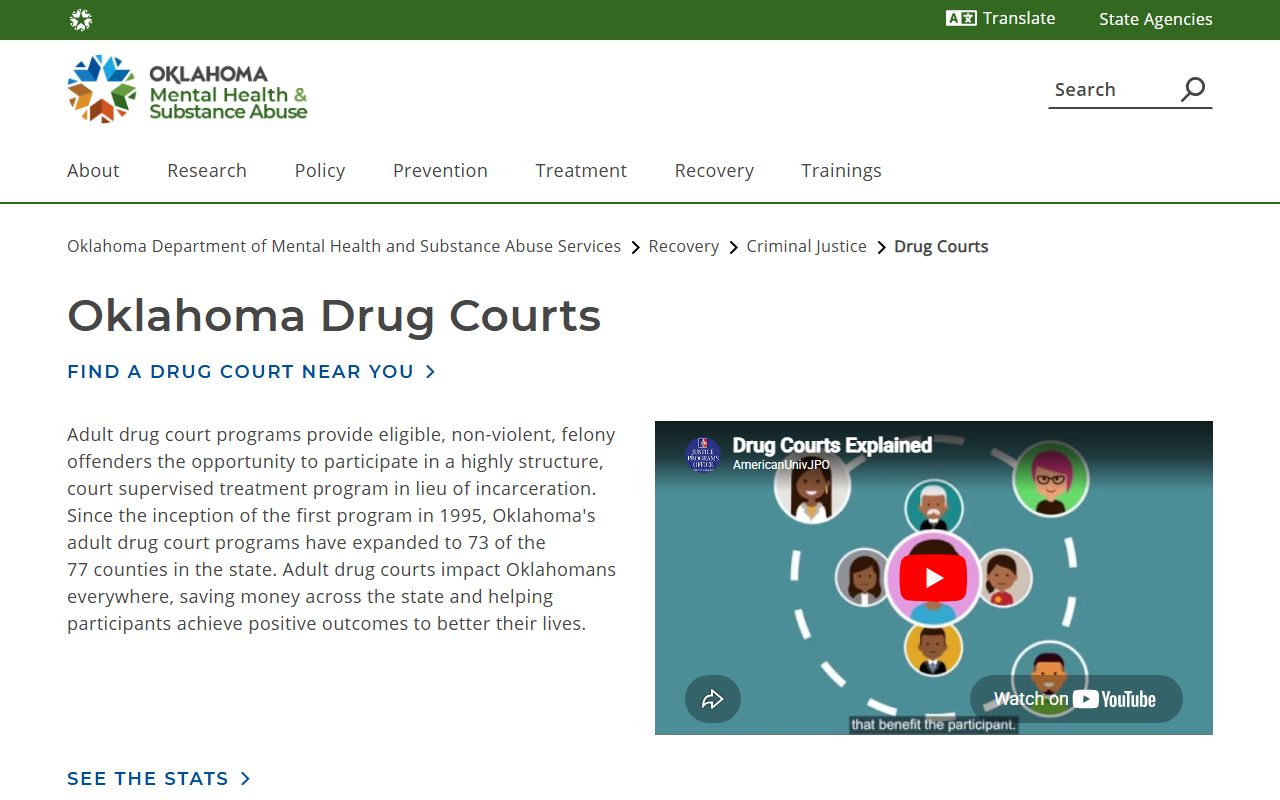
Because these files touch health and capacity, much of their content is sensitive. A name appearing in a case-type list does not mean the underlying guardianship or mental-health record is open to the public.
Restricted and Confidential Probate Records
Probate is largely a public process, but parts of it are shielded by Oklahoma law. Guardianships involving minors and conservatorships tied to capacity often hold medical and financial details that a court can seal. A judge may restrict public inspection of specific filings under a protective order, and mental-health-related proceedings are treated cautiously even when a case label shows up in a search.
Public records also redact the most sensitive personal data. Social Security numbers, full account numbers, and protected information about minors are kept out of the open file. When a probate matter grows out of a family situation, the estate and guardianship pieces are handled separately from the divorce or custody case, which you can trace through Bryan County marriage and divorce records. For copies of any document the portal does not show, the Court Clerk remains the office to call, and the broader set of district filings can be reached through Bryan County court records.